
 Buy now, Pay later

Tufted vs Quilted Mattress Finish: What’s the Difference?
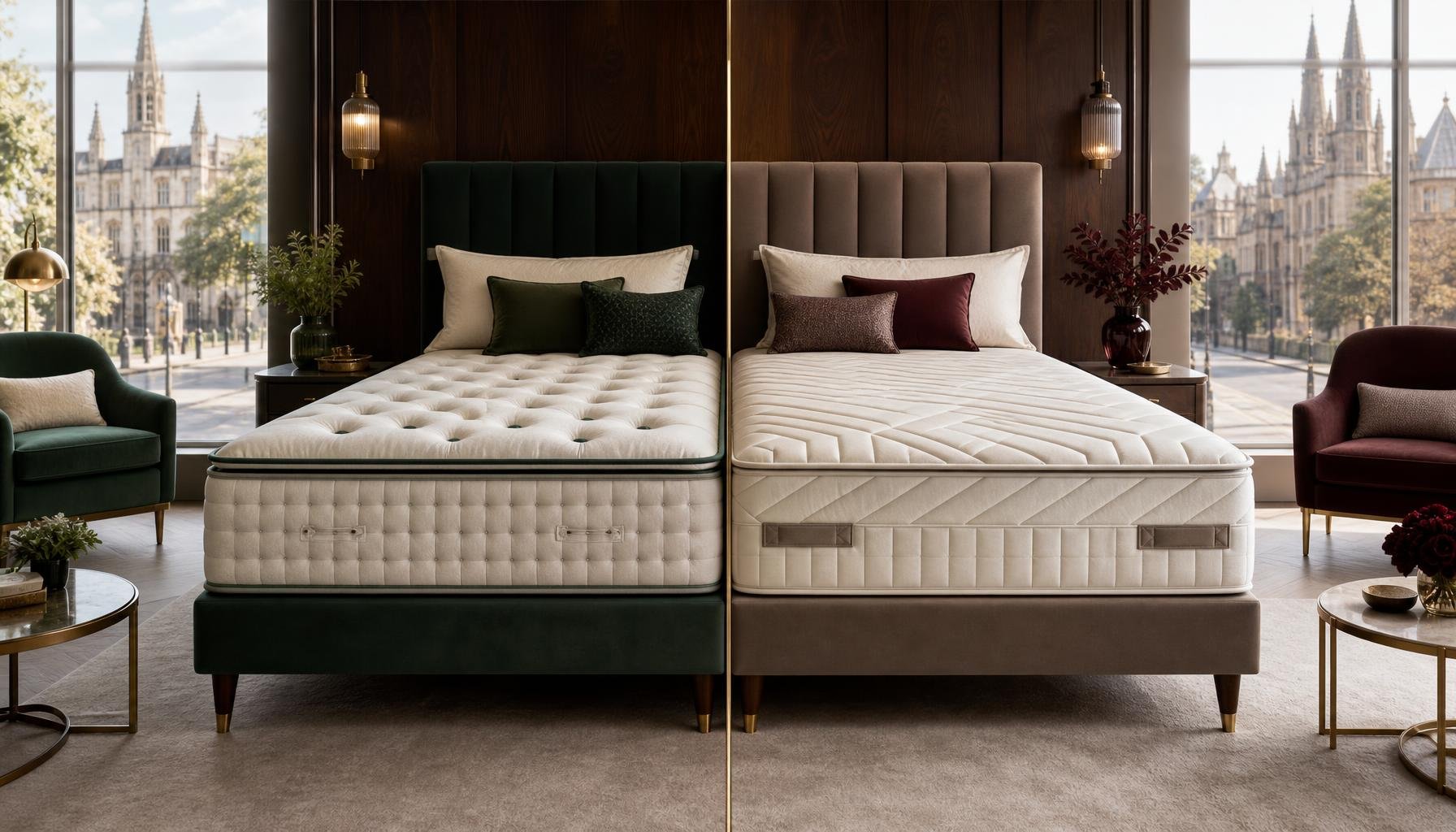
A mattress finish can offer clues about how its surface is made and feels, but appearance doesn’t tell the whole story. The difference in a tufted vs quilted mattress finish comes down to how the upper layers are joined, and that construction can affect the texture you notice when you lie down.
It’s easy to assume that a dimpled, tufted top will always feel firmer, or that a smooth, quilted surface means a softer mattress. Those impressions may help you describe a surface, but the finish alone isn’t a reliable guide to overall comfort or support. The fillings, spring or foam construction and complete mattress build matter too.
In this guide, we’ll explain how tufting and quilting are made, what their surfaces may feel like, and which details to compare when choosing a mattress. You’ll also learn what each finish can and can’t tell you. At our Cambridge showroom, you can explore mattresses in person with our helpful team. We use Klarna to provide interest-free payments on amounts up to £1000, spread over 3 months.
Key Takeaways
- The tufted vs quilted mattress finish comparison starts with construction: tufting secures layers through the mattress, while quilting stitches the top fabric to upper comfort layers.
- Tufted surfaces often have visible dimples; quilted ones are usually smoother. The feel varies between mattresses.
- Neither finish alone tells you how supportive a mattress will be. Compare its full construction, fillings and surface texture.
- Use the finish as one part of your decision, then consider how the mattress feels and suits your preferences.
- Explore mattresses in person at our Cambridge showroom, with over 100 beds across over 20,000 sq ft of space.
What Is a Mattress Finish, and How Do Tufted and Quilted Surfaces Differ?
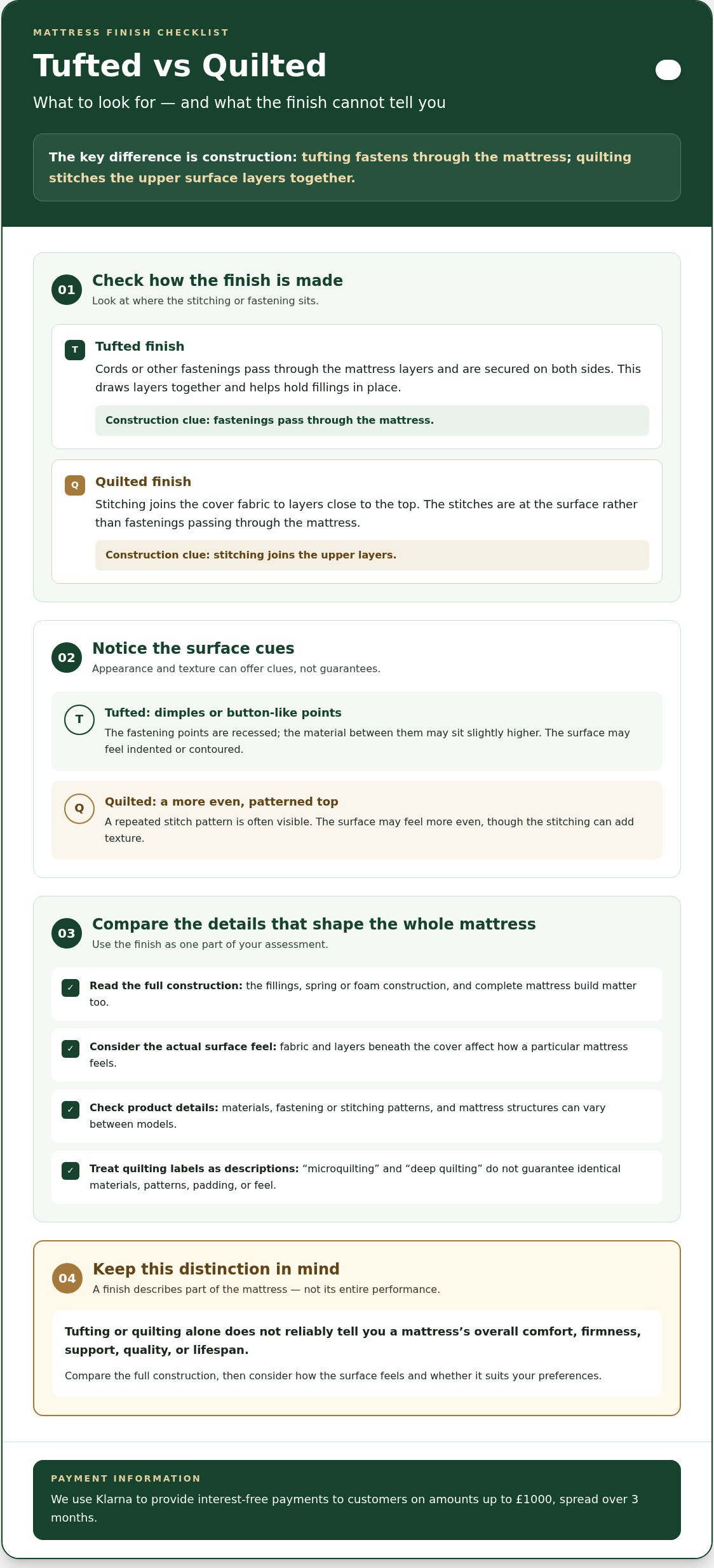
A mattress finish describes the upper surface you see and touch, along with how its cover and nearby layers are joined. It’s one part of the mattress, not a complete measure of quality, comfort or support. The tufted vs quilted mattress finish distinction is mainly about construction: tufts pass through the mattress, while quilting stitches the surface layers together.
A tufted mattress finish uses cords or fastenings that pass through the mattress layers and are secured on both sides, creating visible dimples or buttons. A quilted mattress finish uses stitching to join the cover fabric with layers beneath it, usually creating a more even, patterned surface. These approaches suit different mattress designs and preferences. Neither is automatically the better choice; the complete build and the way the surface feels to you matter too.
What does tufting mean on a mattress?
Look across the top of a tufted mattress and you’ll usually see recessed points, sometimes described as tufts, dimples or buttons. They mark where a cord or similar fastening passes through the mattress and is secured on the opposite side. This holds layers together and helps keep fillings in place rather than leaving them free to shift within the mattress.
The details can vary. One tufted mattress may use different fillings, fabrics and internal structures from another, so its appearance alone doesn’t tell you exactly what’s inside. Nor does the presence of tufts guarantee a particular firmness or lifespan. Tufts show how parts of the mattress are fastened, not the full story of its materials or performance.
What does quilting mean on a mattress?
Quilting joins the mattress cover to layers close to the upper surface using stitching. The stitching may form a repeated pattern and gives the top a generally smoother, more uniform appearance than the pronounced indentations of tufting. Run your hand over a quilted surface and you may notice the pattern’s texture, but the exact feel depends on the cover and layers beneath it.
You may also see terms such as microquilting or deep quilting. They describe different quilting styles or visual effects, but don’t guarantee identical materials, stitching patterns or padding across mattresses. Check the product’s construction details rather than assuming the label specifies a standard build.
Both finishes are part of a wider mattress construction, which can include the cover, upholstery and internal support system. Separate what you can observe from what you need to learn: the finish offers clues about the surface and how some layers are joined, while the fillings and complete construction help explain the mattress’s overall character. This makes comparisons clearer without treating a finish as a shortcut to judging quality.
How Tufted and Quilted Mattress Finishes Are Made
The difference is easiest to see by looking at how each finish is formed. In tufting, a fastening passes through the mattress layers; in quilting, stitching joins the cover to layers near the top. Materials and methods can vary, so these descriptions explain the general construction rather than a fixed specification for every mattress.
How tufting secures mattress layers
To tuft a mattress, a maker passes cord or another fastening through its layers at intervals and secures it on the opposite side. Drawing the layers together at each point creates tension, which can help hold fillings in place. The compressed points form visible indentations, while the material between them may sit slightly higher, creating a dimpled or buttoned pattern.
The number and layout of tufts, as well as the mattress materials, can differ. Tufting tells you something about how layers are fastened, but not the mattress’s support level. That depends on its complete construction.
How quilted and microquilted surfaces are stitched
Quilting joins the top fabric with material beneath it using stitching, often arranged in a repeating pattern. Unlike a fastening that travels through the mattress, the stitches work at the surface. This usually creates a more even-looking top, though the pattern and texture can still be noticeable to the hand.
Microquilting and deeper quilted finishes describe variations in the stitching or surface profile. The names alone don’t specify a universal stitch pattern, layer depth, filling or feel. Look at the individual mattress description for its materials and construction rather than treating these labels as exact standards.
Quilting stitches the upper surface layers together; tufting draws layers together with fastenings that pass through the mattress.
The table offers a quick visual guide. Treat the tactile cues as possibilities, not promises: the fabric, padding and overall build all influence how a particular mattress feels.
| Feature | Tufted finish | Quilted finish |
|---|---|---|
| Construction | Fastenings pass through layers and are secured on both sides. | Stitching joins the cover with layers close to the top. |
| Appearance | Often shows dimples or button-like points, with raised areas between them. | Often looks more uniform, with a visible stitched pattern. |
| Possible surface cue | The fastening points may feel indented or contoured. | The top may feel more even, though stitching can add texture. |
Use the tufted vs quilted mattress finish distinction as a starting point when reading a product description. Then compare the stated fillings and other construction details. A finish helps explain how the surface is made; on its own, it can’t tell you whether the whole mattress will suit your preferred feel.
Tufted vs Quilted: Does the Finish Decide Comfort and Support?
A mattress finish can shape your first impression of its surface, but it can’t tell you how the whole mattress will support your body. The tufted vs quilted mattress finish comparison is useful for understanding texture and construction, not for making a final judgement about firmness or suitability. Those depend on the complete mattress build and your own preferences.
It’s easy to read too much into the labels. A tufted mattress isn’t automatically firm, and a quilted mattress isn’t automatically soft. The fillings beneath the cover, the spring or foam construction, and the way those parts work together all contribute to the feel. Even mattresses with similar finishes can feel quite different.
What might a tufted surface feel like?
Tufts can make a surface feel more textured or contoured, particularly if you notice the indented fastening points when lying down. Some sleepers may be more aware of them than others. Whether that texture feels comfortable is personal and also depends on the mattress layers around the tufts. Their presence doesn’t mean the mattress will feel firm, relieve back pain or provide better support.
What might a quilted surface feel like?
Quilting is commonly associated with a smoother, more even surface impression, although you may still feel the stitching pattern. It doesn’t automatically make a mattress soft. The materials and layers beneath the quilted cover influence how cushioned or firm the surface feels, so two quilted mattresses may give quite different impressions. There’s no universal winner between quilting and tufting.
A finish can describe the surface, but only the complete mattress build and your own comfort preferences can help identify the right mattress for you.
It helps to think of mattress feel in two parts:
- Surface sensation: the texture or contour you notice where your body meets the mattress.
- Overall support: the response of the mattress as a whole, shaped by its internal construction as well as your body and preferred sleeping position.
For example, a quilted top may feel smooth to the touch, but that doesn’t tell you whether the mattress beneath it will feel soft or firm. A tufted surface may have noticeable indentations, while the overall mattress feel still depends on its fillings and support system. Surface texture and support both shape your experience, but they aren’t interchangeable measures.
Use the finish as one clue, then consider the mattress’s listed fillings, construction and stated feel. When comparing options in person, notice both the texture of the top and how the mattress feels when you lie in your usual position. That gives you a more useful basis for comparison than choosing by appearance alone. Personal comfort matters, so an assumption based only on the finish could lead you towards a mattress that doesn’t feel right to you.
How to Choose Between a Tufted and Quilted Mattress Finish
Choosing between a tufted and quilted mattress finish is easier when you treat the surface as one detail among several. Use this checklist to compare product descriptions consistently, then let your preferred feel and the mattress’s complete construction guide your shortlist.
What to check in a mattress description
- Find the finish description. Look for clear wording about tufts, buttons, stitching or the upper surface layers. If a finish isn’t described, don’t assume you can identify it from a photograph alone. Lighting, fabric and image angles can make textures look different.
- Compare the fillings separately. Note the materials named in the description and how they contribute to the mattress’s upper layers. A finish label doesn’t tell you what those layers contain.
- Read the construction details. Compare the stated internal structure, such as the support system and how the mattress is put together. Keep these details distinct from the surface finish.
- Check the stated firmness and feel. Use the product’s own description rather than assuming a tufted mattress must be firm or a quilted one soft. Treat feel as a separate specification.
- Compare like with like. When weighing up two options, line up their fillings, construction and firmness information as well as their finishes. That makes differences easier to understand than comparing appearance alone.
How personal preference can guide your shortlist
Think about the surface sensation you tend to enjoy. A smoother, more even top may appeal if you prefer less noticeable texture; visible tufts may suit you if you’re comfortable with a more contoured surface. These are preferences, not guarantees of how a whole mattress will feel.
Then bring the full build back into focus. Consider the fillings and support construction alongside the surface, and compare the details for each specific model. For example, as you browse the Hypnos mattress range, use each mattress description to assess its construction rather than expecting a brand name or finish to tell you everything.
If it’s practical, seeing a mattress in person can help you understand its surface texture more clearly than a photograph. Compare how the top feels while keeping the description’s fillings and construction in mind. Use that first impression as one part of your decision, not as a substitute for the mattress details.
Our Cambridge showroom is a place to compare mattress options in person. Explore mattress finishes at our Cambridge showroom and consider the surface alongside the fillings and overall construction.
Explore Mattress Finishes at Belfast Bed Superstore in Cambridge
Seeing a mattress in person can help you understand a surface more clearly than a product photo. At Belfast Bed Superstore’s Cambridge showroom, you can explore options and compare how different tops look and feel. The showroom has over 100 beds across over 20,000 sq ft of space, giving you room to consider finishes alongside the rest of each mattress. It’s a useful local option for people comparing beds and mattresses in Cambridge and Cambridgeshire.
Compare the surface alongside the whole mattress
As you look at a mattress, notice whether its top appears smooth, patterned or dimpled, then consider the details that help explain its complete feel. A tufted vs quilted mattress finish can help you think about surface texture, but it doesn’t identify the fillings or support construction on its own.
Our experienced, helpful staff can help you compare the finish with the mattress description, including its fillings, stated firmness and overall construction. Keep each detail separate as you weigh up your preferences. A smooth-looking top may appeal to you, but it’s still worth considering the feel and build of the mattress as a whole. Likewise, visible tufts are a surface detail, not a reliable shortcut to judging support.
Descriptions and photographs can help you narrow your choices, but the finish shown in an image shouldn’t be treated as proof of a particular construction. Focus on the details provided for each mattress, and explore the surface in person. That way, you can compare what you see and feel with the information about the mattress’s fillings and construction.
Take a relaxed next step in Cambridge
A visit can be useful if you’re still deciding whether you prefer a smoother surface or a more textured one. Take time to explore the options, consider how each feels to you and keep your priorities in mind. Our team can offer helpful guidance as you compare, without making the finish the only factor in your decision.
A 30-night sleep trial is available on standard-sized mattresses, subject to terms and conditions. The size limitation matters, so read the relevant terms as you consider your options.
There’s no need to settle the decision by appearance alone. Let your preferred surface texture help shape your shortlist, then weigh it alongside the fillings, firmness and complete construction. For shoppers in Cambridge and across Cambridgeshire, our showroom offers a chance to explore mattress options in person and compare the finishes for yourself.
Choose a Mattress That Feels Right for You
Focus on the kind of rest you want from a mattress, rather than letting a surface label make the decision for you. The tufted vs quilted mattress finish can help you describe the texture you’re drawn to, but your own comfort preferences should lead the way. Give yourself room to compare options thoughtfully and consider how each mattress fits your everyday needs.
A useful shortlist starts with what matters most to you, whether that’s a particular surface feel, a certain level of firmness or the materials used in the mattress. Keep those priorities in mind as you explore, and take time to look at product details alongside your first impression. A well-chosen mattress should feel like a considered fit for your routine, not simply the one with the most appealing finish.
Visit Belfast Bed Superstore in Cambridge to compare mattress options and find a finish that feels right for you.
Frequently Asked Questions
What is the main difference between a tufted and quilted mattress?
The main difference is how the surface layers are held together. A tufted mattress has fastenings that pass through its layers, while a quilted mattress has stitching joining the cover to layers near the top. This is the central distinction in the tufted vs quilted mattress finish comparison. When reading a mattress description, look for details about fastenings or stitching rather than relying only on its name or appearance.
Is a tufted mattress firmer than a quilted mattress?
Not necessarily. Tufting can create a more textured surface impression, but firmness depends on the mattress’s full construction, materials and stated firmness. A tufted top doesn’t tell you how a particular mattress will feel beneath your shoulders or hips. Compare the firmness information for each model directly, and treat the finish as a separate detail rather than using it to predict how firm the mattress will feel.
Is a quilted mattress softer than a tufted mattress?
No, quilting doesn’t automatically mean a mattress is softer. The cushioning and firmness depend on the materials and construction of that specific mattress, not just the stitching pattern on its surface. A quilted top may look smooth, but appearance doesn’t establish how much give it has. If softness matters to you, compare the mattress’s stated feel and materials, then consider how those details match your comfort preferences.
Do mattress tufts make a difference to comfort?
They can affect how the top feels under your hand or body, especially if you’re sensitive to raised or indented areas. That experience varies between sleepers and mattresses. If you’re unsure whether you’ll notice the tufts, feel the surface in person where practical and consider how it feels in your usual sleeping position. Tufts alone don’t show whether a mattress will provide suitable support or address a health concern.
Does a tufted or quilted finish last longer?
The finish alone can’t reliably tell you how long a mattress will last. Durability depends on the quality and combination of materials, the internal construction and how the mattress is used and cared for. A tufted design helps hold layers together, but that fact isn’t a guarantee of a longer lifespan. Compare product details and care guidance, and assess the mattress as a whole rather than judging longevity by the surface finish.
Can you feel the tufts through mattress sheets?
You might notice the surface contours through a sheet, but whether you do depends on the mattress’s top layers, the prominence of its tufts and your sensitivity to texture. A fitted sheet doesn’t necessarily make every surface feel the same. If you’re concerned about noticeable indentations, feel the mattress directly where possible and consider whether the texture remains comfortable in the position you usually sleep in.
What is the difference between quilted and microquilted mattresses?
Microquilting is a term used for a finer or more detailed quilting style, while “quilted” describes the broader approach of stitching the cover to upper layers. The labels don’t establish a universal stitch pattern, layer depth or feel, so descriptions can vary by mattress. Check the construction details for the model you’re considering, especially if you want to understand its cover, surface texture or materials.