
 Buy now, Pay later

Risks of Sleeping on an Old Mattress: What You Should Know
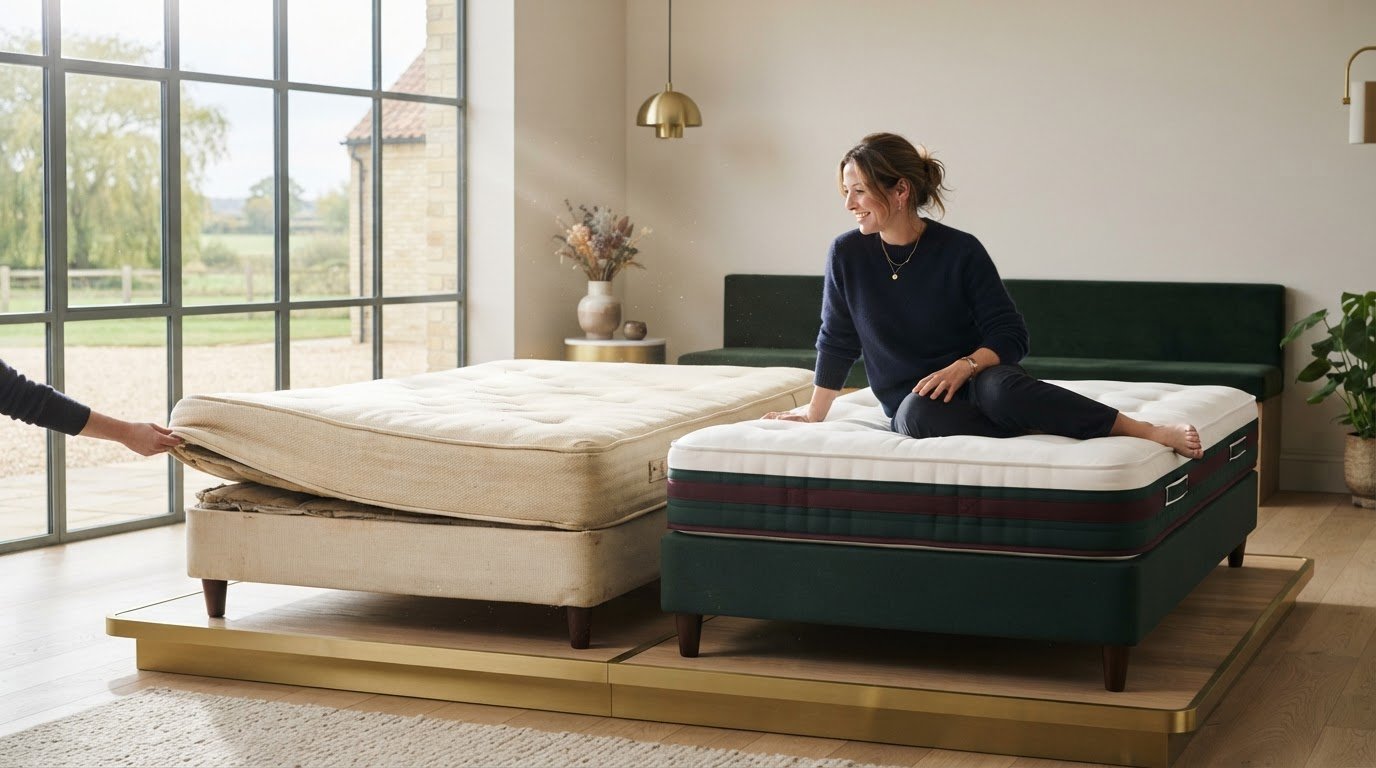
Could the mattress beneath you be affecting your sleep, even if it still looks usable? The risks of sleeping on an old mattress can include reduced support and a build-up of dust and allergens, but an ageing bed isn’t automatically the cause of aches, restless nights or allergy symptoms.
If you’ve noticed a dip, lumps, persistent discomfort or worsening bedroom allergies, it’s understandable to wonder whether your mattress is playing a part. This guide explains the possible effects without treating them as a diagnosis, shows you which signs of wear and hygiene deserve attention, and outlines when replacement may be worth considering. It also looks at the commonly cited seven-year replacement recommendation from the National Bed Federation, while keeping in mind that condition matters as much as age.
If replacing your mattress becomes a practical next step, compare comfort and support in person at our Cambridge showroom. We use Klarna to provide interest free payments on purchases up to £1000, spread over 3 months.
Key Takeaways
- The risks of sleeping on an old mattress depend on its condition and your sensitivities, not its age alone.
- Sagging, lumps or reduced support may affect comfort, but aches and poor sleep can have many causes.
- Dust mites can trigger allergy symptoms in some people; visible dampness, mould or pests also deserve attention.
- Inspect the mattress, note changes in your sleep and clean it appropriately before deciding whether replacement makes sense.
- Comparing different mattress feels and support levels in person can help you choose based on comfort, not promises of a health cure.
What risks can sleeping on an old mattress realistically pose?
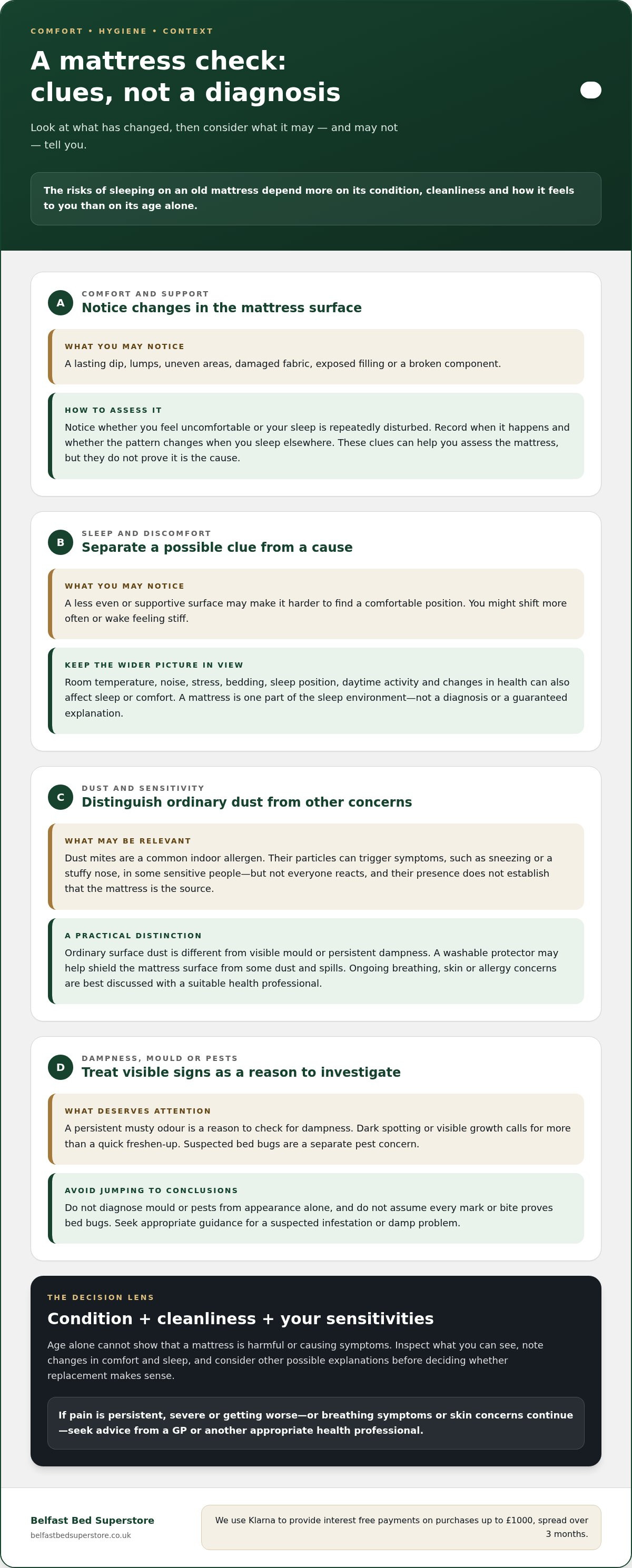
It’s reasonable to wonder whether a mattress that’s seen years of use is behind restless nights or discomfort. The risks of sleeping on an old mattress depend more on its condition, cleanliness and how it feels to you than on its age alone. An older mattress isn’t automatically harmful, and wear or dust doesn’t by itself prove that it’s causing a health problem.
Separate two questions: does the mattress still feel comfortable and supportive, and is there a hygiene issue that needs attention? Either may be worth investigating, but neither is a medical diagnosis. A sagging surface could make it harder to settle into a comfortable position; it can’t, on its own, explain persistent pain or other symptoms.
Which signs suggest the mattress is affecting comfort or sleep?
Check the surface for a lasting dip, lumps or uneven areas. Damaged fabric, exposed filling or a broken component can also indicate that the bed has deteriorated. If you wake feeling uncomfortable or your sleep is repeatedly disturbed, note when it happens and whether the pattern changes when you sleep elsewhere. These observations can help you assess the mattress, but they don’t prove it is the cause.
Consider the wider picture too. Room temperature, noise, stress, bedding and changes in health can all affect sleep. A mattress is one part of your sleep environment, not the whole explanation.
When are hygiene concerns worth investigating?
Ordinary dust on the surface is different from persistent dampness, visible mould or signs of pests. Dust mites are a common indoor allergen, and some people are sensitive to them; an old mattress alone doesn’t show that it contains a harmful level. A washable protector may help shield the mattress surface from some dust and spills. For an overview of the health benefits of mattress protectors, see Wikipedia’s article.
A persistent musty odour is a reason to check for dampness, while dark spotting or visible growth calls for more than a quick freshen-up. Suspected bed bugs are a separate pest concern: don’t assume every mark or bite is proof. Avoid diagnosing mould or pests from appearance alone, and seek appropriate guidance to deal with a suspected infestation or damp problem.
Pay attention to symptoms as well as the mattress. If pain continues, or you have ongoing breathing symptoms or skin concerns, speak with a GP or another suitable health professional. Symptoms can have many causes, so replacing a mattress shouldn’t be treated as a guaranteed remedy. Inspect what you can see, note changes in comfort and sleep, and weigh those clues alongside other possible explanations before deciding what to do next.
How can an old mattress affect sleep, comfort and allergies?
A mattress can shape how comfortable you feel overnight, but it’s only one possible influence on sleep and wellbeing. The risks of sleeping on an old mattress are sometimes discussed as if age itself explains pain or illness. It doesn’t. Mattress age alone cannot diagnose a health problem or prove that a mattress is causing symptoms. Condition, individual sensitivity and other health or bedroom factors all matter.
As a mattress wears, its surface may become less even or supportive. That can make it harder to find a comfortable position or stay settled. A restless night or morning ache may be a useful prompt to look at the bed, but neither proves the mattress is responsible. Sleep position, daytime activity, stress and other health issues may also play a part.
Can reduced support contribute to aches or disrupted sleep?
A dip beneath the hips or shoulders, or a noticeable uneven patch, may change how your body rests on the surface. You might shift position more often or wake feeling stiff. Notice whether discomfort is recurring and whether it seems to coincide with changes in the mattress, but don’t treat that pattern as a diagnosis. Pain can have several causes, and a mattress change can’t be promised to resolve it.
If pain is persistent, severe or getting worse, seek advice from a GP or another appropriate health professional rather than relying on a mattress replacement to address it.
Can dust mites or mould trigger allergy symptoms?
Dust mites are common in household environments. Their tiny particles, including material from their bodies and droppings, can trigger symptoms in some sensitive people, such as sneezing or a stuffy nose. Their presence doesn’t mean everyone will react, and it doesn’t establish that a mattress is the source of symptoms. Ordinary household dust is also different from visible mould or evidence of persistent dampness.
If you suspect dampness or mould, check the conditions around the bed as well as the mattress. A musty smell or visible growth is a reason to investigate the moisture source, not a basis for diagnosing an allergy. Don’t assume that breathing or skin symptoms are caused by the bed. A healthcare professional can help assess ongoing allergy or breathing concerns and discuss what might be triggering them.
To make sense of a possible connection, record when symptoms or disturbed sleep occur alongside changes you notice in the mattress or bedroom. This can help you describe the pattern to a healthcare professional without jumping to conclusions. If the surface feels uncomfortable or visibly uneven, comparing different mattress feels and support in person may help you assess comfort as one factor. You can compare mattress comfort and support at our Cambridge showroom, while keeping health concerns separate from the decision to replace a bed.
Does an old mattress automatically mean you are at risk?
No. An older mattress isn’t automatically dangerous, and its age alone can’t show that it’s causing symptoms. A mattress may still feel comfortable and be in good condition after years of use, while a newer one can have a problem if it’s damaged or exposed to dampness. The risks of sleeping on an old mattress depend on what you can observe, how it feels and whether you’re sensitive to particular allergens.
A warning sign is a reason to investigate, not proof that a mattress has harmed your health. Visible wear may suggest reduced comfort, and dampness or suspected pests warrants attention, but neither finding confirms a medical condition or explains symptoms by itself.
What matters more than the mattress age?
Assess the mattress as it is now, rather than relying on its age as a verdict. A lasting sag or uneven surface may affect comfort. Torn fabric or exposed materials can indicate damage, while persistent odour, visible mould or signs of pests call for a closer look at the cause. Ordinary dust, on its own, is not evidence of contamination or illness.
Also consider whether your sleep comfort has changed and whether symptoms happen only in bed or elsewhere too. A pattern can guide what to investigate, but it can’t identify the cause. Replacement advice based on age can be a useful maintenance prompt, not a universal medical safety deadline. Condition, materials, care and personal comfort all vary.
Which claims about old mattresses need caution?
Online articles may connect an old mattress with an alarming range of health effects. Treat claims that it causes serious disease, weakens immunity or affects heart health with caution unless they’re backed by reliable evidence. The more specific concerns are that a worn surface may contribute to discomfort, and allergens such as dust-mite particles can trigger symptoms in some sensitive people.
Words matter. “May contribute” describes a possibility; it doesn’t establish cause. “Can trigger” recognises that an allergen may affect some people without suggesting everyone will react. Dampness or visible mould warrants investigation, but appearance alone doesn’t diagnose an illness. If a claim online sounds frightening, look for dependable health guidance rather than treating a mattress article as medical advice.
For a balanced decision, separate what you can see from what you feel and what you suspect. Note physical changes to the mattress, whether comfort has shifted, and any symptoms or circumstances that might offer context. If something appears damp, mouldy or pest-related, address that concern appropriately. If pain, breathing symptoms or other health concerns persist, seek advice from a healthcare professional instead of assuming the mattress is responsible.
Replacement can still be a sensible comfort or condition choice, even without evidence of a health risk. Equally, an older mattress that remains clean, intact and comfortable doesn’t become dangerous simply because it has passed a particular age. Assess the evidence in front of you, and avoid letting dramatic claims turn uncertainty into alarm.
How should you assess, clean or replace an ageing mattress?
A calm, step-by-step check can help you decide what needs attention without treating age as a verdict. The risks of sleeping on an old mattress depend on its condition and comfort, so start with what you can observe, then consider how you’re sleeping and what care is suitable.
What should you inspect before deciding?
In good light, check the full sleeping surface, edges and seams. Look for lasting dips, uneven areas, torn fabric or exposed materials, and note any persistent odour. Also look for signs of dampness, visible mould or pests. These clues warrant investigation, but they don’t identify a cause by themselves. Avoid disturbing suspected pests or mould while you work out the next step.
- Inspect the mattress and its surroundings. Look for visible wear, damp patches, mould or pest signs on the mattress, bed base and nearby area. A mark or smell can have more than one explanation, so record what you find rather than guessing.
- Reflect on comfort and sleep. Consider whether discomfort or disrupted sleep is new, persistent or changing. Think about other factors too, such as bedding, room conditions, stress or changes in your health. A pattern can help you decide what to investigate, but it can’t confirm the mattress is responsible.
- Clean with care. Follow the manufacturer’s care guidance for your mattress. Routine surface care and airing, where the maker recommends it, may help manage cleanliness, but won’t restore lost support or repair damaged materials. Avoid unverified chemical treatments, which may not be suitable for the fabric or filling.
- Choose the next step. Decide whether the mattress remains comfortable, intact and clean, or whether a problem persists despite suitable care. If suspected bed bugs or significant mould are present, seek appropriate professional help rather than relying on household cleaning alone.
When can cleaning help, and when is replacement worth considering?
Cleaning can address surface dirt or routine freshness when carried out according to the maker’s instructions. It can’t reverse sagging, uneven support or structural damage. If these issues remain, or the mattress continues to feel uncomfortable, replacement may be a practical choice. That decision is about condition and comfort, not a claim that a new mattress will treat a health problem.
If there’s no persistent damage or hygiene concern and the mattress still feels comfortable, age alone may not be a reason to replace it. If you decide to compare alternatives, trying different feels and support levels in person can help make the choice more informed. Compare mattress comfort and support at our Cambridge showroom as you consider what feels right for you.
Choosing a replacement mattress in Cambridge without pressure
If your mattress is persistently uncomfortable or visibly worn, replacing it may be a sensible comfort and condition decision. It shouldn’t be treated as a guaranteed answer to pain, allergies or other health symptoms. The risks of sleeping on an old mattress aren’t determined by age alone, so focus on what you’ve noticed and what you want from a new sleeping surface.
Trying options in person gives you a chance to compare how different feels suit you, rather than relying only on descriptions. In our Cambridge showroom, you can explore over 100 beds across more than 20,000 sq ft of space, at your own pace.
How can trying a mattress help you compare options?
Lie down in your usual sleeping position and give yourself time to notice how each mattress feels. Compare firmness, pressure and support, then see how easy it is to change position. A mattress that feels comfortable at first glance may feel different once you’ve settled into it. There’s no single feel that suits everyone, so use your own comfort as the guide.
Our showroom includes options from brands such as Hypnos mattresses and Sealy. Comparing beds side by side can make differences in feel easier to notice. If you have particular comfort preferences, sharing them with experienced staff can help you explore suitable options without turning the visit into a rushed decision.
What is a sensible next step for Cambridge shoppers?
Make a short note of what matters most: the feel you prefer, how you like to sleep and what hasn’t been comfortable about your current mattress. Bring those points to a relaxed showroom visit and use them to compare. You don’t need to treat a new mattress as a health treatment; it’s a chance to choose a surface that feels comfortable and better suits your preferences.
Standard-size mattresses have a 30-night sleep trial, subject to terms and conditions. This applies only to standard-size mattresses, and the trial isn’t a promise of symptom relief or improved health. Read the relevant terms as part of your decision so you understand how the trial applies.
Take the time you need to compare, ask questions and decide whether a replacement feels right for you. If you’re ready to explore mattress options in person, plan a visit to our Cambridge showroom.
Take the next step towards more comfortable rest
Use what you’ve noticed to make a measured choice. If your mattress feels uncomfortable or shows clear signs of wear, exploring alternatives may be worthwhile. If symptoms persist, don’t assume a new bed will resolve them; seek appropriate health advice. The risks of sleeping on an old mattress aren’t determined by age alone, so let your comfort and the mattress’s condition guide your decision.
You don’t need to have every detail figured out before comparing options. Think about the feel you prefer, take your time, and choose a mattress that suits your needs rather than reacting to alarming claims. A relaxed visit can help turn uncertainty into a practical next step.
Explore mattresses at our Cambridge showroom and compare options at your own pace. A more comfortable choice can start with a simple, informed visit.
Frequently Asked Questions
Can an old mattress cause back pain?
A sagging or uneven mattress may make comfortable sleep harder and contribute to morning discomfort for some people, but back pain has many possible causes. An old mattress can’t be assumed to be responsible. Notice whether the surface has changed and whether discomfort continues, including after nights away from home. For severe, ongoing or worsening pain, seek medical advice rather than relying on a mattress change as treatment.
Can sleeping on an old mattress cause allergies?
An older mattress can collect dust and allergens, including dust-mite particles that trigger symptoms in some sensitive people. That doesn’t mean every old mattress causes allergies, or that age identifies the source. Consider whether symptoms change in different rooms or away from home, and keep bedding and the sleep area clean. If allergy or breathing symptoms persist, discuss them with a healthcare professional.
How do you know if your mattress is too old?
There isn’t a reliable age-only test. Look for persistent sagging, uneven support, damaged materials or lasting odours, and consider whether the mattress has become less comfortable. A written note of what has changed can help you compare how it feels over time. If wear or discomfort remains despite appropriate care, it may be sensible to explore alternatives, regardless of the exact purchase date.
Can dust mites in a mattress make you ill?
Dust mites are common household allergens, and particles from them can trigger symptoms in people with sensitivities. Their presence doesn’t automatically mean you’ll become ill, and mattress age alone can’t show whether they’re behind a reaction. Keep bedding and the sleep area clean, and note whether symptoms appear in other settings too. Seek medical advice if allergy or asthma symptoms persist, worsen or affect daily life.
Should you replace a mattress if it has mould?
Visible mould or persistent dampness needs attention, but the right response depends on how extensive it is and what’s causing it. Don’t treat significant mould as a routine cleaning job or apply unverified chemicals. Address the dampness and seek appropriate professional guidance. If the mattress is damaged or can’t be made suitable for continued use, replacement may be the practical next step.
Can cleaning an old mattress make it safe to keep?
Cleaning may help with surface dirt and routine freshness, but it can’t restore worn support or repair damaged materials. Follow the manufacturer’s care instructions, since cleaning methods that suit one mattress may not suit another. Avoid unverified treatments. Suspected bed bugs or significant mould may require professional attention. Decide whether to keep the mattress based on its condition, comfort and hygiene, not on the assumption that cleaning fixes every issue.
When should you speak to a doctor about symptoms after sleeping?
Speak with a healthcare professional if pain, breathing problems, allergy symptoms or skin concerns are persistent, severe or getting worse. The risks of sleeping on an old mattress can be difficult to separate from other possible causes, so avoid self-diagnosing based on age or timing alone. Before your appointment, note when symptoms occur, whether they happen elsewhere and any recent changes to your bedroom or sleep routine.